Indigenous Knowledge and Land Use Research
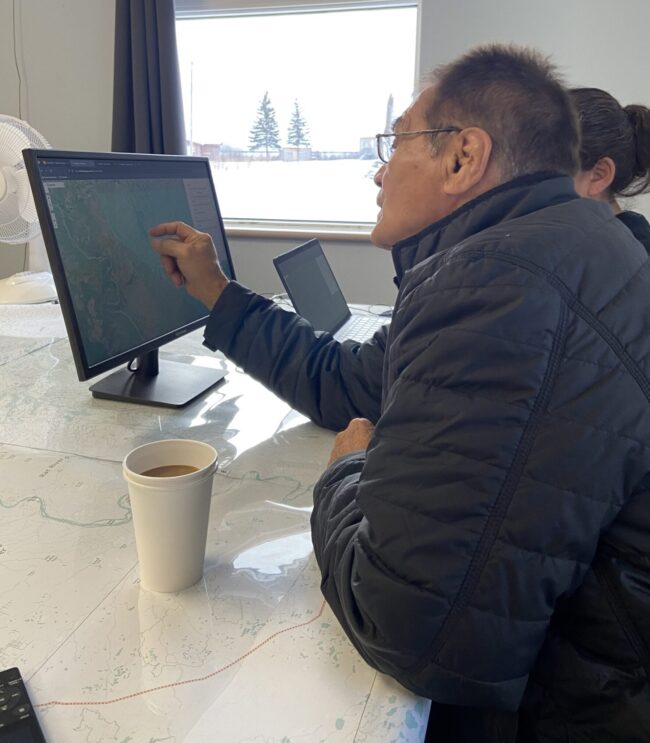
We work collaboratively with communities to design and carry out Indigenous knowledge and land use research that is respectful, community-led, and fit for real-world decision-making.
Indigenous knowledge and land use information are central to community identity, governance, and stewardship. When documented with care and applied with intention, this knowledge can also play a critical role in land and water management, planning, and the protection of rights.
Our approach centres the priorities of knowledge holders while ensuring that the information gathered can be meaningfully applied in governance, regulatory, and legal contexts.
Projects are designed with flexibility and can include training or active roles for community staff and members at any stage—from planning and interviews, to data management, analysis, and reporting. We support communities in building internal capacity while ensuring research is conducted to a standard that stands up beyond the community when needed.
Indigenous knowledge and land use research typically results in clear, well-documented outputs that can support a wide range of uses, including land and wildlife management, land use planning, negotiations, and regulatory or impact assessment processes. Where appropriate, this work also contributes foundational evidence for cumulative effects assessments and land or title claims.
This research is often supported by Trailmark, our knowledge stewardship platform developed through more than a decade of close collaboration with Indigenous users. Trailmark provides secure digital infrastructure for organizing interviews, maps, and archival records, helping communities manage sensitive knowledge and apply it across projects over time.
Learn more about how Trailmark software supports Indigenous knowledge and land use research →